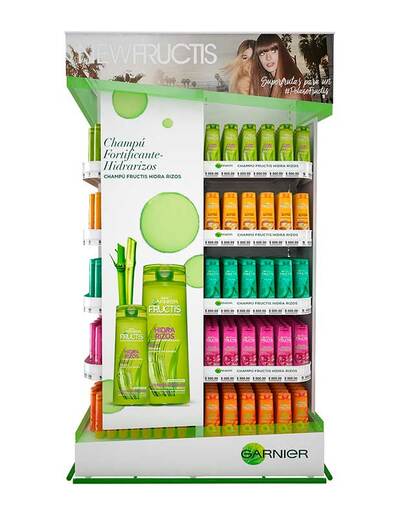
Walk into any supermarket and look at the ends of the aisles. That is where brands fight hardest for attention, and for good reason. Shoppers pass those spots on every lap of the store, often without a specific product in mind. If you work in trade marketing, brand management or channel sales, understanding how this space works is one of the fastest ways to win secondary placements and move more product.
This guide answers a question we hear from brand teams every week, what is an end cap display, and shows how to turn that space into measurable sales.
The problem most brands face on the shelf
A product sitting in its home aisle competes with a dozen look-alikes on the same shelf. The shopper has to find it, compare it and decide, all in a few seconds. Many good products never get that chance because they are placed low, in the middle of a crowded section, or simply out of the shopper’s natural path.
The end of the aisle changes the equation. It gives a single brand an uninterrupted moment with the shopper, away from direct competitors and in a high-traffic location. The challenge is that retailers only grant that space to brands that bring a display worth having.
What is an end cap display and why retailers protect it
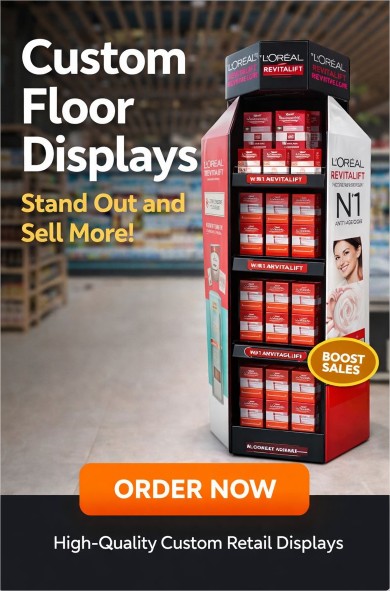
An end cap is the shelving unit positioned at the end of a store aisle, facing the main traffic corridor. The end cap display is the branded merchandising structure that fills it, whether a dedicated metal or plastic fixture, a cardboard unit for a promotion, or a full custom build with headers, trays and lighting.
If you are asking what is an endcap from a commercial point of view, think of it as the most visible secondary placement inside a store. Shoppers walking the perimeter see it from a distance, turn into the aisle next to it and often stop to look. Retailers know this, which is why end caps are frequently sold as premium real estate or negotiated as part of promotional agreements.
For a brand, the value is simple. A well-executed end cap can lift sales of a featured product several times over its normal aisle performance during the promotional window, while reinforcing brand identity at the point where most purchase decisions are made.
How an end cap display works for your brand
A successful end cap does three things at once.
Stops the shopper. Height, color, lighting and a clear header message interrupt the walk and pull the eye toward the product.
Tells a quick story. In two or three seconds the shopper should understand what the product is, why it matters now and what the offer is. Seasonal themes, new launches and bundles work especially well here.

Makes the purchase easy. Products should be at eye and hand level, well stocked, with clear pricing. Trays, hooks and dividers keep the unit organized through the day so the display still looks sharp at closing time.
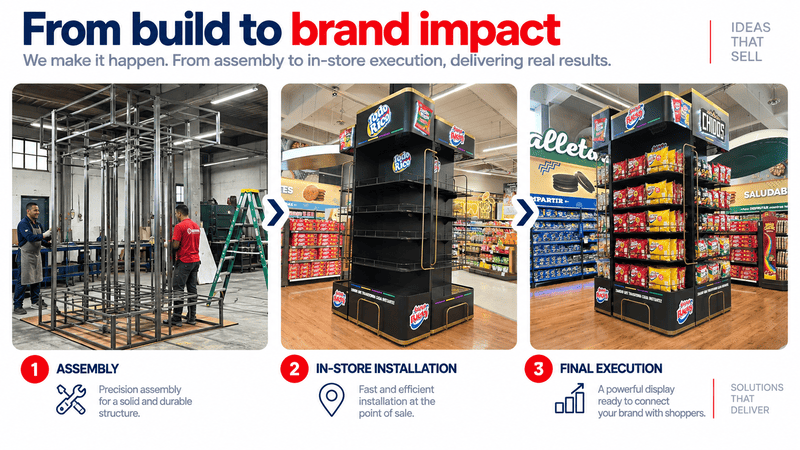
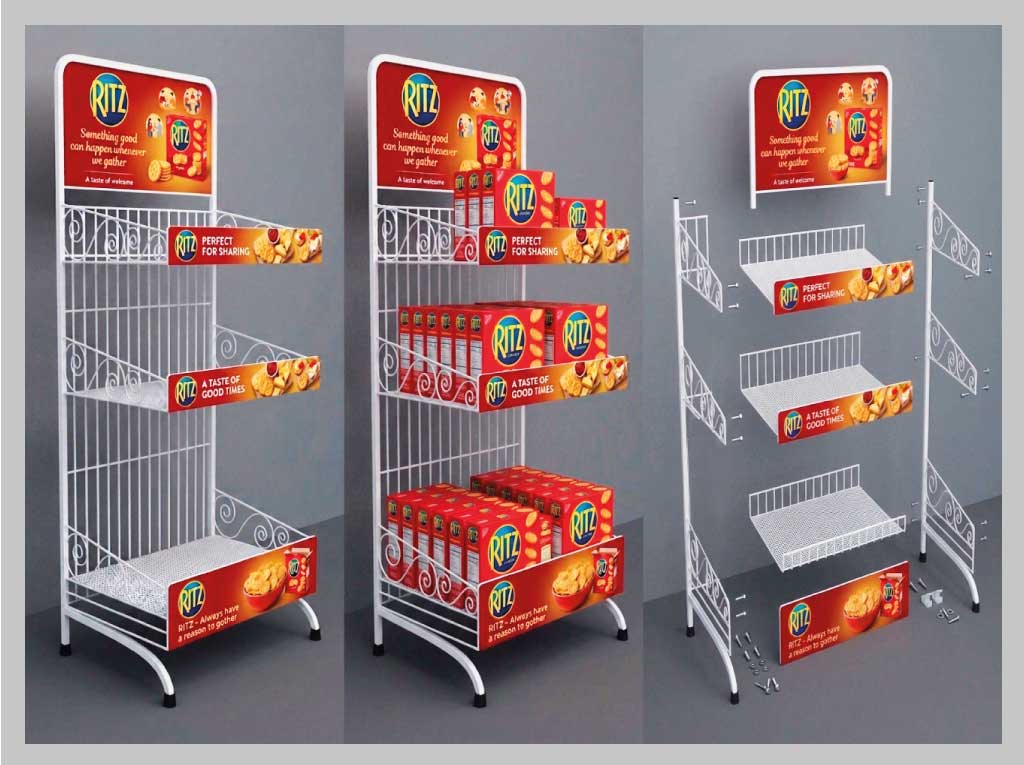
The format you choose depends on duration and budget. Temporary cardboard end caps suit short campaigns and seasonal pushes. Permanent fixtures in metal, acrylic or mixed materials are built for brands that hold the space for months or rotate campaigns on the same structure. Flat-pack versions ship unassembled and can be set up in minutes, which matters when you are deploying across hundreds of stores.
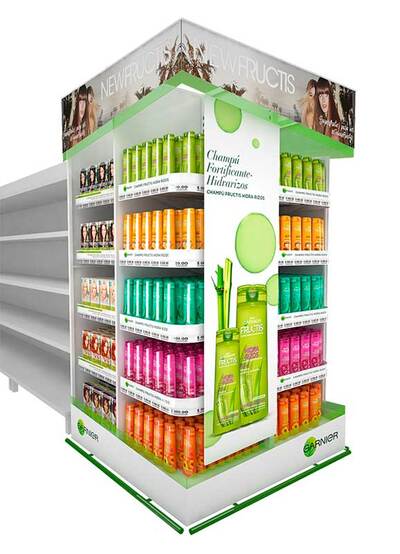
End cap grocery store examples that consistently perform
The end cap grocery store environment is where this format shows its full potential. A few scenarios we see succeed again and again.
Seasonal launches. A chocolate brand builds a themed end cap for the holiday period with gift packs at eye level and single units below for impulse purchases. The display runs for six weeks and is swapped for the next season.
Cross-merchandising. A snack brand pairs its product with a beverage partner on the same end cap near the checkout corridor. Shoppers buying one tend to pick up both, which raises the average basket.
New product introductions. A personal care brand uses an end cap with a 3D header and sampling tray to introduce a new line. The display gives the launch visibility that a standard shelf facing never could.
Bulk and value promotions. A household brand uses a pallet-style end cap for multipacks. The format communicates value immediately and simplifies restocking for store staff.
In every case the display is designed around a commercial goal, not just a nice-looking structure.
End cap display ideas that get approved by retailers
Retailers accept displays that respect their standards and help their store sell. If you are gathering end cap display ideas for your next campaign, these principles keep proposals moving forward.
Design for the retailer’s footprint. Each chain has size, weight and safety requirements. A display engineered to those specs avoids rejections and delays.
Keep the message to one idea. A single promotion or product hero outperforms a crowded display that tries to sell everything.
Plan for durability. Carts, restocking and curious shoppers are hard on fixtures. Materials and construction should match the time the display will be on the floor.
Make it easy to assemble and restock. Store teams have minutes, not hours. Clear instructions and simple assembly protect your investment after shipping.
Think in programs, not one-offs. A structure that can be re-skinned for new campaigns delivers more value than a display built for a single use.
Why brands partner with a specialized manufacturer
Getting an end cap from idea to store involves design, engineering, prototyping, production, logistics and installation. Doing it in-house or across several vendors usually means lost time and inconsistent results.
Diforma In Store has designed and manufactured point-of-purchase displays for more than 27 years, with over 8,800 projects delivered for brands such as KitKat, Milo, Durex, Pedigree and Under Armour. Our design center in Delray Beach, Florida, and our manufacturing plant in Bogotá let us move from brief to proposal quickly and produce at scale, with tariff-free shipping to the United States and Europe under current trade agreements.
Our custom end cap displays are built around the retailer’s requirements and your sales objective, whether that is a temporary cardboard unit for a seasonal push or a permanent fixture that anchors your brand in the aisle for years.
Ready to win the end of the aisle
If you have a launch, a seasonal campaign or a retailer negotiation coming up, the right end cap can be the difference between a product that sits and a product that sells. Share your brief with our team and we will send a proposal with concept renders, materials and timelines tailored to your market.Request a proposal, chat with an advisor on WhatsApp or download our free retail display guide to start planning your next end cap.