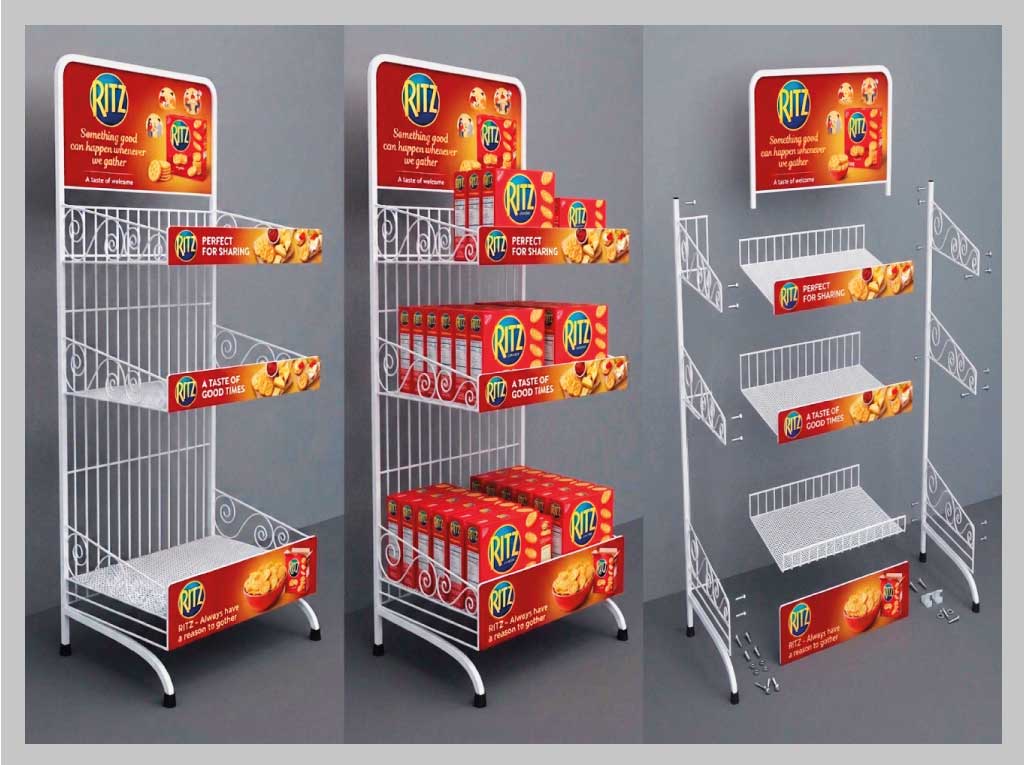
Custom flat-pack retail displays are metal or plastic point of purchase displays engineered to ship completely disassembled and be built in-store in minutes, without tools or specialists. Because the graphics are interchangeable, you can re-skin the same structure for a new flavor, season or launch instead of paying to produce a whole new unit.
Why Your Displays Cost More Before They Ever Sell Anything
Most brands discover the real cost of a floor display after the purchase order is signed. The unit looks great in the render, performs well in the pilot store, and then reality arrives: oversized freight, pallets that eat volumetric space, damaged pieces in transit, and store crews who need thirty minutes and a screwdriver to assemble something that was supposed to be plug and play.
If you manage trade marketing for an FMCG brand, you already know this friction has a name in your budget. It shows up as logistics overspend, as displays that arrive after the promotion started, and as units retired after a single campaign. That is precisely the gap that well engineered custom retail displays are meant to close, and it is the reason our floor displays are designed around disassembly from the first sketch, not as an afterthought.
The friction is rarely about design quality. It is about how the structure behaves between the factory and the shelf.

What Changes When the Display Ships Flat
A flat-pack structure is not a downgrade in presence. It is a decision to separate the permanent part of the display from the temporary part.
The permanent part is the frame: powder coated metal, injected or thermoformed plastic, reinforced joints, adjustable shelving. The temporary part is the communication: headers, side panels, shelf strips, price talkers, seasonal artwork.
When you split those two layers, three things happen almost immediately.
Freight volume drops. A knocked down unit travels in a fraction of the cubic space a preassembled one requires. More units per pallet means fewer shipments, lower cost per store and better protection during transit.
Damage rates fall. Flat components stacked with protective separators survive rough handling far better than a tall assembled structure with exposed edges and cantilevered shelves.
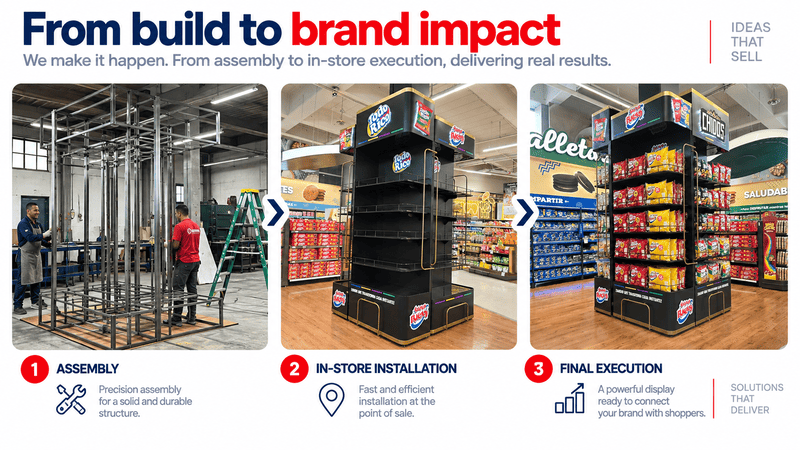
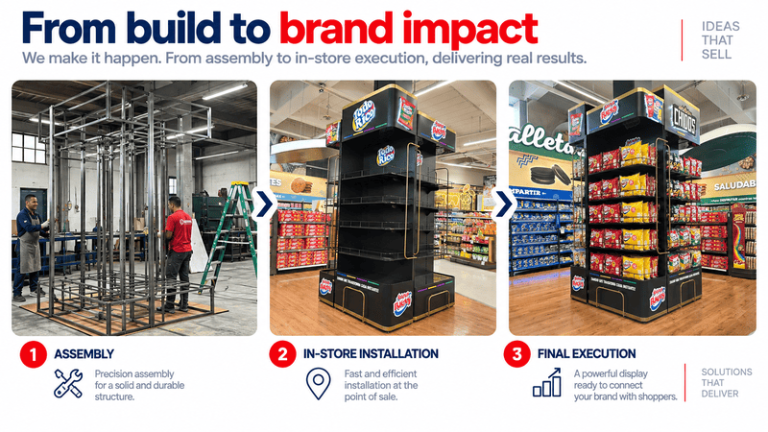
Setup stops depending on skill. A clean knock down displays / flat pack retail display system is built around tool free connections, numbered parts and an assembly sequence a store employee can follow without training or supervision.
Metal and Plastic Instead of Corrugated, and Why That Matters
There is a legitimate place for cardboard display stands and corrugated POP displays. They are fast, light and economical for short bursts of activation.
But if your product rotates permanently, if your category faces humidity, heavy handling or high traffic, or if you want the same footprint to serve four campaigns a year, corrugated becomes a recurring expense with a short lifespan.
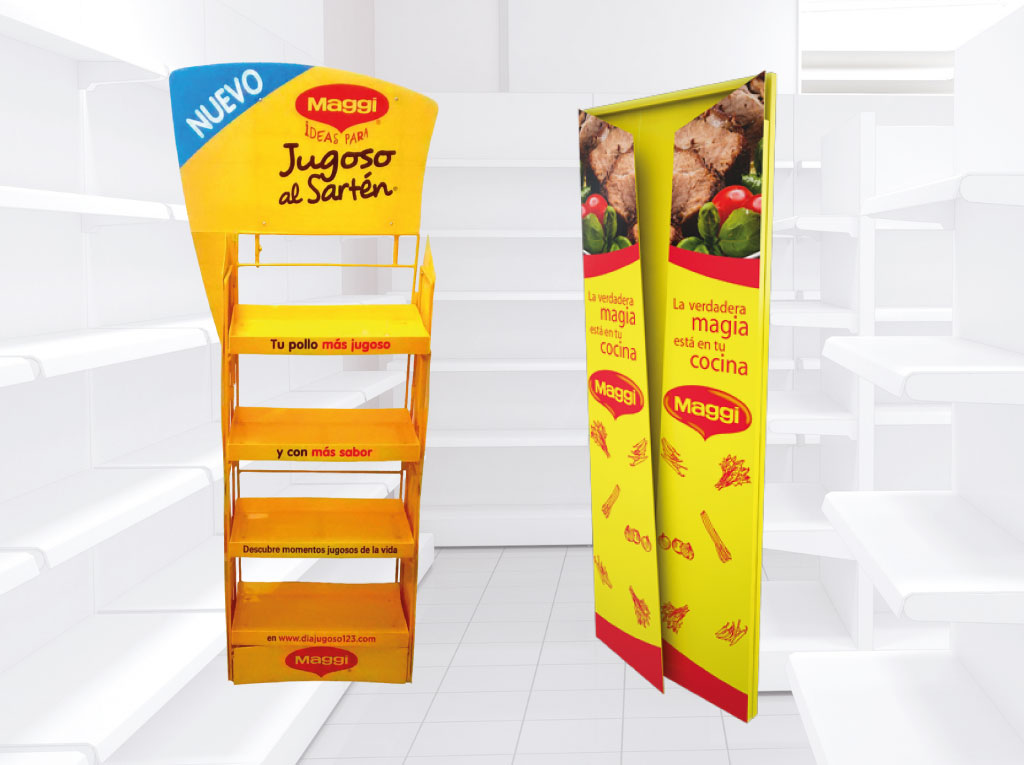
Durable retail display fixtures change that equation. A metal or plastic frame designed for repeated assembly can live in the store for years while the graphic layer rotates as often as your marketing calendar demands. You stop buying a new display every quarter and start buying a new skin.
That is the core idea behind reusable structures. It can replace or re-skin the graphics to reuse for a different flavor, season, launch and so on, without touching the structural investment.
How the Process Actually Works
Good flat-pack engineering starts long before production. Over more than twenty years developing point of sale solutions for consumer goods companies across different markets, we have learned that the sequence matters as much as the materials.
Category and Store Reality First
Before any design, the display has to answer to a real environment. Aisle width, ceiling height, planogram restrictions, retailer compliance rules, product weight, replenishment frequency and who physically installs the unit. A beautiful display that does not fit the retailer’s specifications never reaches the floor.
Structural Design With Disassembly Built In
Every joint, panel and shelf is designed to come apart and go back together. Connection systems are selected for repeatability, so the twentieth assembly is as solid as the first. Tolerances are calculated so components nest tightly when packed and lock firmly when built.
Graphic System Separated From Structure
Artwork lives on removable panels, magnetic sheets, sliding frames or clip-in headers. This is what makes the unit campaign agnostic. Your creative team designs new graphics; your operations team ships a lightweight kit instead of a full display.
Prototype, Stress Test, Then Scale
A physical prototype gets assembled, disassembled and loaded before mass production. This is where weak points appear and get corrected, not in store number 240.
Packaging Engineered for the Journey
Packaging is part of the product. Component protection, clear labeling, illustrated instructions and kit completeness determine whether the display arrives ready to work or ready to generate complaints.
Where This Approach Pays Off Most
Multi flavor and multi variant launches. A beverage or snack brand launching three seasonal variants a year can use one structure and three graphic kits, cutting production cycles significantly.
National rollouts with dispersed stores. When you need hundreds of units across regions, freight savings compound fast. Flat-pack shipping often becomes the difference between covering 150 stores and covering 400 with the same logistics budget.
Retailers with strict installation windows. Some chains allow very limited setup time. Tool free assembly keeps you compliant and keeps your merchandising team focused on selling, not on building.
Categories that need permanent presence. Personal care, home care, pet food and other high rotation categories benefit from durable fixtures that hold their appearance month after month.
Practical Recommendations Before You Approve a Design
Ask how many minutes assembly takes and who will perform it. If the answer requires a technician, the design is not finished.

Confirm how many complete graphic changes the structure supports without visible wear. A reusable frame should handle multiple cycles cleanly.
Request the packed dimensions and units per pallet during quoting, not after. That number drives your real cost per store.
Validate replenishment access. Shelf spacing and product facing depth should let store staff refill without dismantling anything.
Plan the graphic system with your creative team early. If the artwork format is defined at the same time as the structure, every future campaign becomes a fast, low cost swap.
Turning Display Investment Into a Reusable Asset
The brands that win visibility consistently are not the ones spending the most on point of purchase displays. They are the ones treating the structure as an asset and the graphics as a variable.
If your next campaign is already on the calendar and you are weighing structure, freight and installation, that is the right moment to design something built to travel flat, install fast and change identity as often as your market demands. We can help you engineer it from the first measurement to the last pallet.